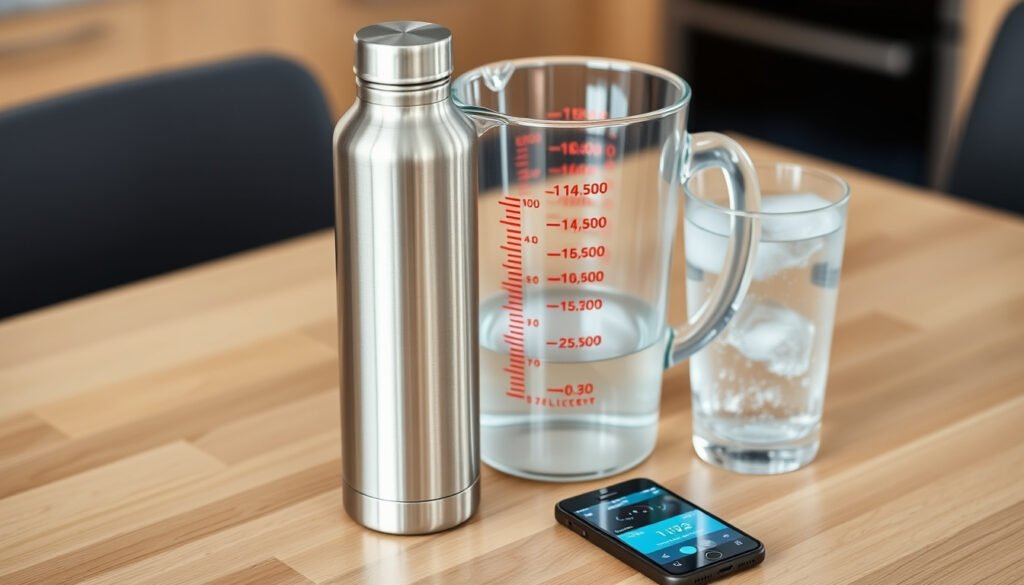
40 oz to Liters: Exact Conversion & Hydration Guide (1.183 L)
If you’ve ever grabbed a 40 oz water bottle and wondered how it stacks up against liters, the quick answer is 40 US fluid ounces equals about 1.183 liters, which is 18% more than a single liter. This guide walks through the exact conversion, compares 40 oz to common bottle sizes, and puts it in context of daily hydration targets backed by official health guidance.
40 US fluid ounces in liters: 1.183 liters ·
40 oz as percentage of 1 liter: 118% ·
Standard water bottle size (US): 16.9 oz (0.5 L) ·
Daily water intake recommendation (general): 2 liters (67.6 oz)
Quick snapshot
- 40 US fl oz = 1.18294 liters (UnitConverters.net unit conversion calculator)
- 1 liter = 33.814 US fluid ounces (NIST (U.S. standards body))
- 40 oz is 18.3% more than 1 liter (CalculateMe.com volume converter)
- Whether a 40 oz bottle always uses US fluid ounces — some international products may use imperial ounces (40 imperial oz ≈ 1.136 L) (Answers.com reference)
- Individual hydration needs vary; no single daily number fits everyone. (Answers.com reference)
- How much water from food contributes to daily intake is not captured in this conversion. (Answers.com reference)
- Conversion standards from NIST and US customary system remain unchanged. No regulatory shifts expected.
- More products are using metric labeling alongside ounces; consumers will see both units more frequently.
A quick reference of the key conversion values for 40 oz and related volumes:
| Measurement | Exact value | Rounded value |
|---|---|---|
| 40 US fl oz in liters | 1.18294 L | 1.183 L |
| 1 liter in US fl oz | 33.814 oz | 33.8 oz |
| 40 oz in milliliters | 1,182.94 mL | 1,183 mL |
| 40 oz in cups | 5 US cups | 5 cups |
| 40 oz in gallons | 0.3125 US gallons | 0.31 gal |
Is 40 oz equal to 1 liter?
40 US fluid ounces equals 1.183 liters
- 40 US fluid ounces = 1.18294 liters, according to UnitConverters.net (unit conversion calculator).
- The CalculateMe.com volume converter reports the same value, rounded to 1.183 liters.
- 1 liter equals 33.814 US fluid ounces (NIST (U.S. standards body)).
Why 40 oz is not exactly 1 liter
- 40 oz is 6.186 oz more than the 33.814 oz in a liter — that’s 18.3% greater.
- So 40 oz is about 1.18 times the volume of a liter, not a perfect match.
The takeaway: a 40 oz bottle holds more than a liter. If a recipe or hydration goal calls for 1 liter, a 40 oz bottle overshoots by nearly one-fifth. For precise mixing or tracking, this difference matters.
How many liters are in 40 fluid ounces?
Exact conversion formula
- Multiply ounces by 0.0295735295625 (the exact conversion factor from UnitConverters.net).
- 40 × 0.0295735295625 = 1.1829411825 liters
40 fl oz to liters in scientific notation
- 1.1829 × 10⁰ L
- Common rounding: 1.183 L, accurate enough for everyday use.
The conversion is straightforward, but remember that the US fluid ounce is 1/128th of a US gallon, not the same as the imperial ounce used in the UK and some Commonwealth countries. A 40 oz imperial bottle would hold only 1.136 L, slightly less.
How many 40 oz bottles make 2 liters?
2 liters = 67.628 US fluid ounces
- 2 liters × 33.814 oz/L = 67.628 oz (UnitConverters.net).
- 40 oz is about 59% of 2 liters (40 ÷ 67.628 = 0.5915).
- You need 1.69 bottles of 40 oz to reach 2 liters.
40 oz bottle volume relative to 2-liter goal
- One 40 oz bottle covers a little more than half the 2-liter target.
- Two 40 oz bottles give 80 oz (2.366 L), exceeding 2 liters by 0.366 L.
The implication: if your goal is 2 liters (a common daily target), one 40 oz bottle won’t cut it — you need either a second bottle or supplements with smaller drinks.
Is 40 oz of water a day enough for hydration?
NIH general water intake recommendations
- The National Institute on Aging (NIH health guidance) states Adequate Intake (AI) for women is 2.7 L (91 oz) per day from all beverages and foods.
- For men the AI is 3.7 L (125 oz) per day (NIA).
- 40 oz equals about 47% of women’s AI and 32% of men’s AI — well below the recommendation.
Factors affecting personal hydration needs
- Activity level, climate, and overall health can raise or lower individual needs.
- According to Kisskind hydration guide, common adult daily targets range from 64–96 oz.
- Even at 64 oz (the lower end), 40 oz falls short.
Forty ounces alone is not enough for most adults. For a woman meeting the 2.7 L AI, 40 oz covers less than half. To hit the minimum 64 oz general recommendation, you’d need another 24 oz — or just under 1.5 of those standard 16.9 oz bottles.
While 40 oz bottles are popular for convenience, their volume can mislead buyers into thinking one bottle meets daily needs. The data says otherwise: reaching the NIH’s lower AI for women requires 2.7 L, which is 2.3 times the volume of a single 40 oz container.
40 oz is a start, but for adequate hydration most adults need to supplement with additional water throughout the day.
Here’s how 40 oz compares to other common bottle sizes:
| Bottle size (fl oz) | Liters (exact) | Liters (rounded) | % of 2 L goal |
|---|---|---|---|
| 16.9 oz (standard water bottle) | 0.500 L | 0.5 L | 25% |
| 32 oz | 0.946 L | 0.95 L | 47% |
| 40 oz | 1.183 L | 1.18 L | 59% |
| 64 oz | 1.893 L | 1.89 L | 95% |
| 67.6 oz (2 L) | 2.000 L | 2.0 L | 100% |
Confirmed facts
- 40 US fluid ounces = 1.18294 liters (UnitConverters.net)
- 1 liter = 33.814 US fluid ounces (NIST (U.S. standards body))
- NIH Adequate Intake for women: 2.7 L per day; for men: 3.7 L per day (National Institute on Aging (NIH research arm))
What’s unclear
- Whether a “40 oz” bottle always uses US fluid ounces — some international products may use imperial ounces (40 imperial oz ≈ 1.136 L) (Answers.com community reference).
- Individual hydration needs vary based on activity, climate, and health status — no single daily number fits everyone.
- How much water from food contributes to daily intake is not captured in this conversion.
“A liter is defined as the volume of a cube that is 10 centimeters on a side. There are about 3.785 liters in a U.S. gallon.”
— CalculateMe.com (volume conversion reference)
“Adequate Intake for water for women is 2.7 L and for men 3.7 L, but needs can vary.”
— National Institute on Aging (NIH health guidance)
Related reading: **How Many Oz of Water Per Day** · **7 Feet in Inches**
For those tracking larger hydration goals, the 64 oz to liters conversion provides a useful comparison for double the volume.
Frequently asked questions
Is 32 oz the same as 1 liter?
No. 32 US fluid ounces equals 0.946 liters, or about 0.95 L. 1 liter is 33.814 oz, so 32 oz falls just short.
How much is 40 oz in milliliters?
40 US fl oz = 1,182.94 mL (rounded to 1,183 mL).
What is the difference between US and imperial fluid ounces?
The US fluid ounce is about 29.57 mL, while the imperial ounce is about 28.41 mL. 40 US oz = 1.183 L, 40 imperial oz = 1.136 L.
How many cups are in 40 oz?
40 US fluid ounces equals 5 US cups (since 1 cup = 8 fl oz).
Does a 40 oz Stanley cup hold exactly 1.183 liters?
Yes, Stanley and most US brands use US fluid ounces, so a 40 oz cup holds about 1.183 liters. Always check product labeling to confirm.
Why do hydration recommendations use liters instead of ounces?
Liters are the standard metric unit for volume worldwide. Health organizations like the NIH use liters for consistency, though they often also provide ounce equivalents.
More related posts
 Iggy Pop: Health, Sobriety, and Career Facts
 Coffee Shops Near Me – Best Apps to Find Open WiFi Spots
 Tij Iginla: Biography, Hip Surgery, Race & Family Facts
 Que notre joie demeure: Meaning, Plot Summary, and Controversy
 Lady Gaga: Biography, Diagnosis, Husband, and Net Worth
 Andrew Knack’s Personal Life: Wife, Children & Political Party
 Trisha Krishnan: Age, Net Worth, Marriage, Movies & More
 Cleetus McFarland: Real Name, Net Worth, Wife, and Career Facts
