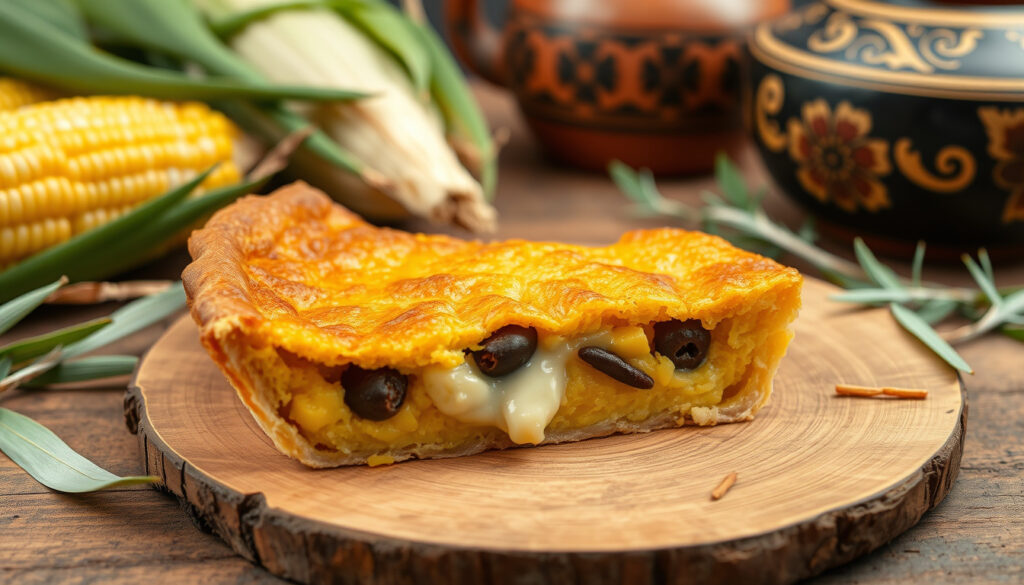
Best Tarta de Choclo Near Me – Authentic Spots and Guide
Tarta de choclo is a beloved South American corn pie that combines savory ground beef with a creamy, golden corn topping. Whether you call it tarta de choclo or pastel de choclo, this dish represents a fusion of Indigenous corn traditions and Spanish colonial cooking techniques. For those searching for the best tarta de choclo near me, finding an authentic version can be challenging depending on your location.
The dish features a rich filling of seasoned ground beef, onions, olives, raisins, and hard-boiled eggs beneath a thick layer of mashed sweet corn. This comfort food staple has deep roots in both Argentina and Chile, where it is served at family gatherings, celebrations, and traditional restaurants. Understanding what makes an authentic tarta de choclo can help you identify the real thing when searching locally.
What Is Tarta de Choclo?
Tarta de choclo is a baked corn pie that occupies a unique space between savory casserole and traditional pastry. The dish consists of two main components: a meat filling known as pino in Chilean cuisine, and a corn-based topping made from choclo, the large-kerneled corn native to South America. The contrast between the rich, spiced meat layer and the sweet, creamy corn crust defines the character of this dish.
The filling typically combines ground beef with onions, garlic, cumin, and paprika, enriched with briny black olives, sweet raisins, and sliced hard-boiled eggs. Some variations include chicken pieces alongside the beef, while others keep the filling purely beef-based. The pino mixture is sautéed until fragrant and deeply flavored before being arranged in a baking dish.
- Regional variations exist – The Argentine version emphasizes beef and eggs, while the Chilean pastel de choclo often includes chicken
- Seasonal availability matters – Fresh corn season (late summer) yields the best flavor for the topping
- Authenticity markers – True versions use whole corn kernels, not creamed corn from a can
- Serving tradition – Traditionally served hot, straight from the oven, as a main course rather than dessert
- Gluten-free by nature – The corn-based topping makes this naturally gluten-free when prepared traditionally
| Fact | Details |
|---|---|
| Cuisine | Argentine/Chilean |
| Type | Savory baked pie |
| Calories | Approximately 350-400 per slice |
| Prep Time | 45-60 minutes |
| Baking Time | 30-45 minutes at 175°C (350°F) |
| Serving | Hot, as main course |
Where to Find the Best Tarta de Choclo Near Me
Locating authentic tarta de choclo near you depends heavily on your proximity to communities with Argentine or Chilean populations. Major metropolitan areas with significant South American diaspora communities—such as New York, Miami, Los Angeles, and Chicago—typically offer the best options for finding this dish prepared correctly. Smaller cities may have limited or no options for authentic versions.
Restaurant searches in many U.S. cities reveal primarily Mexican and Venezuelan establishments, which, while serving delicious Latin American cuisine, generally do not feature tarta de choclo on their menus. The dish requires specific ingredients and preparation methods that differ from Mexican corn dishes like tamales or elote. This means searching for “tarta de choclo near me” may yield different results than searching for general Latin American food options.
Types of Establishments That May Serve Tarta de Choclo
Several types of restaurants and food businesses may offer authentic or adapted versions of this corn pie. Argentine steakhouses, known for their parillas (grilled meat) menus, sometimes include tarta de choclo as a side dish or appetizer. Chilean restaurants, particularly those specializing in comfort food, frequently feature pastel de choclo as a signature item alongside empanadas and cazuela.
Latin American grocery stores and markets sometimes offer freshly made tarta de choclo in their prepared foods sections. These locations often provide the most authentic versions because they cater to customers familiar with traditional preparations. Farmers markets in areas with South American communities may also feature vendors selling homemade versions during peak corn season.
Delivery Options and Availability
Delivery options for tarta de choclo remain limited in most markets. Major delivery platforms like Uber Eats, DoorDash, and Grubhub primarily list Mexican, Chinese, and American restaurants in most neighborhoods. When Argentine or Chilean restaurants are available on these platforms, tarta de choclo may or may not be included on their delivery menus due to the dish’s fragility and reheating requirements.
When searching for tarta de choclo delivery, try searching for “Argentine restaurant near me” or “Chilean restaurant delivery” rather than the dish name directly. Restaurants are more likely to appear under their cuisine type than the specific dish name.
Some food enthusiasts have found success calling Argentine or Chilean restaurants directly to order tarta de choclo for pickup or delivery, even when it does not appear on their standard menus. Calling ahead allows restaurants to prepare the dish fresh, ensuring better quality than pre-made versions that may have sat under heat lamps.
How to Spot Authentic Tarta de Choclo
Distinguishing authentic tarta de choclo from imitations or fusion interpretations requires attention to several key characteristics. The most reliable indicator is the presence of distinct layers—the meat filling should be clearly visible beneath a separate corn topping layer, rather than mixed together or presented as a simple corn casserole. An authentic version maintains this visual separation and textural contrast between the savory pino and the sweet corn crust.
Visual and Textural Indicators
The corn topping of an authentic tarta de choclo should display a golden-brown crust with slightly caramelized edges, indicating it has been baked until the natural sugars in the corn have caramelized. The surface should show characteristic browning patterns, not just steamed or microwaved coloring. When sliced, the topping should hold its shape rather than collapsing into a mushy consistency.
The filling should reveal visible pieces of ground beef (not finely minced), chunks of hard-boiled egg, whole or halved olives, and plump raisins. If the filling appears uniformly brown and homogenous with no distinguishable ingredients, the dish may be an simplified adaptation rather than an authentic preparation.
Authentic tarta de choclo often has a slightly sweet corn topping made from fresh or frozen whole corn kernels, not canned creamed corn. The sweetness should be subtle and natural, complementing rather than overwhelming the savory filling.
Taste Profile and Seasoning
The flavor balance in authentic tarta de choclo reflects both Spanish colonial and Indigenous influences. The beef filling typically features cumin, paprika, and sometimes oregano, creating a warmly spiced profile with undertones of sweetness from the raisins. The corn topping should taste genuinely of corn—sweet, slightly starchy, and buttery—without excessive sugar or artificial flavoring.
Salt levels also provide clues to authenticity. Traditional preparations season both layers separately, resulting in well-balanced seasoning throughout. An overly salty filling masked by bland corn, or vice versa, may indicate rushed or inexpert preparation.
Traditional Recipe and Variations
The traditional preparation of tarta de choclo follows a two-stage process that separates the making of the meat filling from the corn topping. This methodical approach allows each component to develop its flavors fully before being combined for baking. Understanding this method helps appreciate why the dish requires more time than simple one-pot preparations.
Making the Meat Filling (Pino)
The pino begins with sautéing diced onions until translucent, then adding minced garlic and ground beef. The beef is browned thoroughly before being seasoned with cumin, paprika, salt, and pepper. Once the meat is cooked and seasoned, the heat is reduced, and the mixture simmers briefly to meld the flavors. The olives, raisins, and sliced hard-boiled eggs are folded in near the end of cooking, preserving their textures while allowing flavors to integrate.
Some regional variations include cubed chicken breast in addition to or instead of beef, particularly in Chilean versions of pastel de choclo. The chicken is typically poached separately before being added to the filling, ensuring it cooks through without drying out during the final baking.
Preparing the Corn Topping
The corn topping uses either fresh corn kernels scraped from the cob or frozen choclo, which is often preferred for its authentic flavor and convenient availability. The corn is blended with a small amount of milk, butter, sugar, and cornstarch to create a thick, spreadable consistency that will hold its shape when baked. Some recipes include an egg yolk for additional richness and color.
The thickness of the corn layer is crucial—it should be at least one inch thick to provide proper coverage of the filling and develop the characteristic golden crust. Recipes that skimp on the corn topping sacrifice both visual appeal and the essential textural contrast that defines the dish.
Traditional tarta de choclo bakes at 175°C (350°F) for 45-60 minutes until the corn topping is deeply golden. Rushing this step with higher heat results in an undercooked topping and potential burning.
Origins and Cultural Significance
Tarta de choclo traces its roots to the collision of Spanish colonial cuisine with the Indigenous traditions of South America. Corn, or choclo, was a sacred crop throughout pre-Columbian civilizations, used in everything from beverages to stews. Spanish colonizers introduced European cooking techniques, including baking and the use of wheat flour and eggs, which merged with existing corn-based preparations.
The dish as we know it today developed during the 19th century, when European immigration to Argentina and Chile brought new cooking styles that influenced local cuisine. The Argentine version, particularly associated with the Mendoza region, emphasizes beef as the primary protein, reflecting the region’s cattle ranching heritage. The Chilean pastel de choclo incorporated chicken more frequently, likely influenced by the country’s abundant poultry and different agricultural patterns.
Today, tarta de choclo remains a comfort food staple, often served at family gatherings, Sunday lunches, and traditional celebrations. For South American immigrants living abroad, finding authentic tarta de choclo serves as a connection to home and cultural identity. The dish’s popularity has led to adaptations in restaurants worldwide, though these interpretations vary widely in their fidelity to traditional methods.
For those interested in broader culinary topics, exploring regional variations across South America reveals fascinating connections between geography, history, and food culture. The same principles that define authentic tarta de choclo—local ingredients, traditional techniques, cultural significance—apply to other traditional dishes worth preserving.
Known Facts and Areas of Uncertainty
When researching tarta de choclo, several factual points are well-established through culinary sources and cultural documentation, while other aspects remain subject to regional variation or limited documentation.
| Established Information | Uncertain or Variable Information |
|---|---|
| Primary ingredients include corn, ground beef, onions, and eggs | Precise origin region (Argentina vs. Chile) |
| Baked at 175°C (350°F) until golden | Exact spice proportions and seasoning |
| Features two distinct layers | Role of raisins (traditional vs. optional) |
| Developed during 19th century | Evolution of recipes across generations |
| Served as main course, not dessert | Regional popularity and availability data |
| Associated with family gatherings | Modern fusion adaptations |
The attribution of tarta de choclo specifically to Argentina versus Chile remains genuinely contested among culinary historians and food writers. Both countries claim the dish as part of their national cuisine, with slight variations in preparation and presentation. This uncertainty reflects the organic nature of cross-cultural food traditions, which evolve without clear documentation of their exact origins.
Credible Sources for Further Reading
“Tarta de choclo represents a beautiful fusion of Old World and New World culinary traditions, combining European baking techniques with the sacred corn of Indigenous South America.”
— General culinary documentation on South American cuisine
For readers seeking to deepen their understanding of tarta de choclo and South American culinary traditions, several types of sources provide reliable information. Academic food histories offer context for how colonial influences shaped regional cuisines. Cookbooks specializing in Argentine or Chilean cuisine provide tested recipes and cultural commentary.
Tourism boards from Chile and Argentina sometimes feature traditional recipes and cultural information about beloved national dishes. Culinary publications with focus on Latin American food provide both historical context and modern interpretations. Restaurant reviews from established food critics in cities with significant South American communities offer practical guidance on where to find quality preparations.
Finding Tarta de Choclo: Next Steps
For those searching for the best tarta de choclo near them, several approaches can improve the chances of finding authentic preparations. Starting with Google Maps and searching for “Argentine restaurant” or “Chilean restaurant” in your area provides a foundation of potential sources. Once identified, checking reviews on platforms like Yelp, TripAdvisor, and Google can reveal which establishments are known for traditional cooking.
Calling restaurants directly to inquire about tarta de choclo availability often yields better results than relying solely on online menus, as some establishments prepare it for special orders or rotating specials. If no nearby options exist, preparing tarta de choclo at home using traditional recipes from reputable sources offers an alternative path to enjoying this distinctive dish.
For those interested in broader topics related to food and cuisine, exploring similar questions about local culinary resources or food-related questions can provide useful context for navigating local food scenes.
Frequently Asked Questions
Is tarta de choclo sweet or savory?
Tarta de choclo is primarily savory, though the corn topping has a subtle natural sweetness. The meat filling is seasoned with cumin and paprika, creating a savory-spiced profile. The contrast between the sweet corn and savory filling defines the dish’s character.
Can I get tarta de choclo delivered?
Delivery availability varies significantly by location. Major delivery platforms like Uber Eats and DoorDash may list Argentine or Chilean restaurants, but tarta de choclo is often not included on standard delivery menus. Calling restaurants directly to order may yield better results.
Is tarta de choclo gluten-free?
Traditional tarta de choclo is naturally gluten-free because the topping uses only corn, milk, butter, and cornstarch—no wheat flour is required. However, restaurant preparations may vary, so those with gluten sensitivities should confirm ingredients with the establishment.
What’s the difference between tarta de choclo and pastel de choclo?
The names are largely interchangeable, with “tarta” being more common in Argentina and “pastel” in Chile. Both refer to the same type of corn pie with meat filling. The Chilean version may more frequently include chicken alongside beef.
What does tarta de choclo taste like?
The dish offers a combination of sweet, creamy corn with savory spiced beef, briny olives, and occasional bursts of sweetness from raisins. The texture contrast between the tender corn topping and the chunky meat filling creates a distinctive eating experience.
How many calories are in tarta de choclo?
A typical slice of tarta de choclo contains approximately 350-400 calories. The exact count varies based on ingredients used, portion size, and specific preparation methods. Nutritional information from food databases can provide more precise figures based on specific recipes.
More related posts
 Joffre Lakes Provincial Park: Hike Guide, 2025 Closures & Tips
 Candice King: Marriage, Divorce, Kids, and Net Worth
 Anya Taylor-Joy: Biography, Unique Look & Career
 FC Barcelona vs Atlético Madrid Stats: Head-to-Head Record
 Louis Theroux: Biography, Net Worth, and Key Documentaries
 Best Things to Do in Whistler Year-Round: 2025 Guide
 Things to Do in Jasper – Best Hikes, Drives and Wildlife
 Jake Tapper: Biography, Salary, Controversies, and Personal Life
